Pint, schooner, middy: what Perth venues actually pour
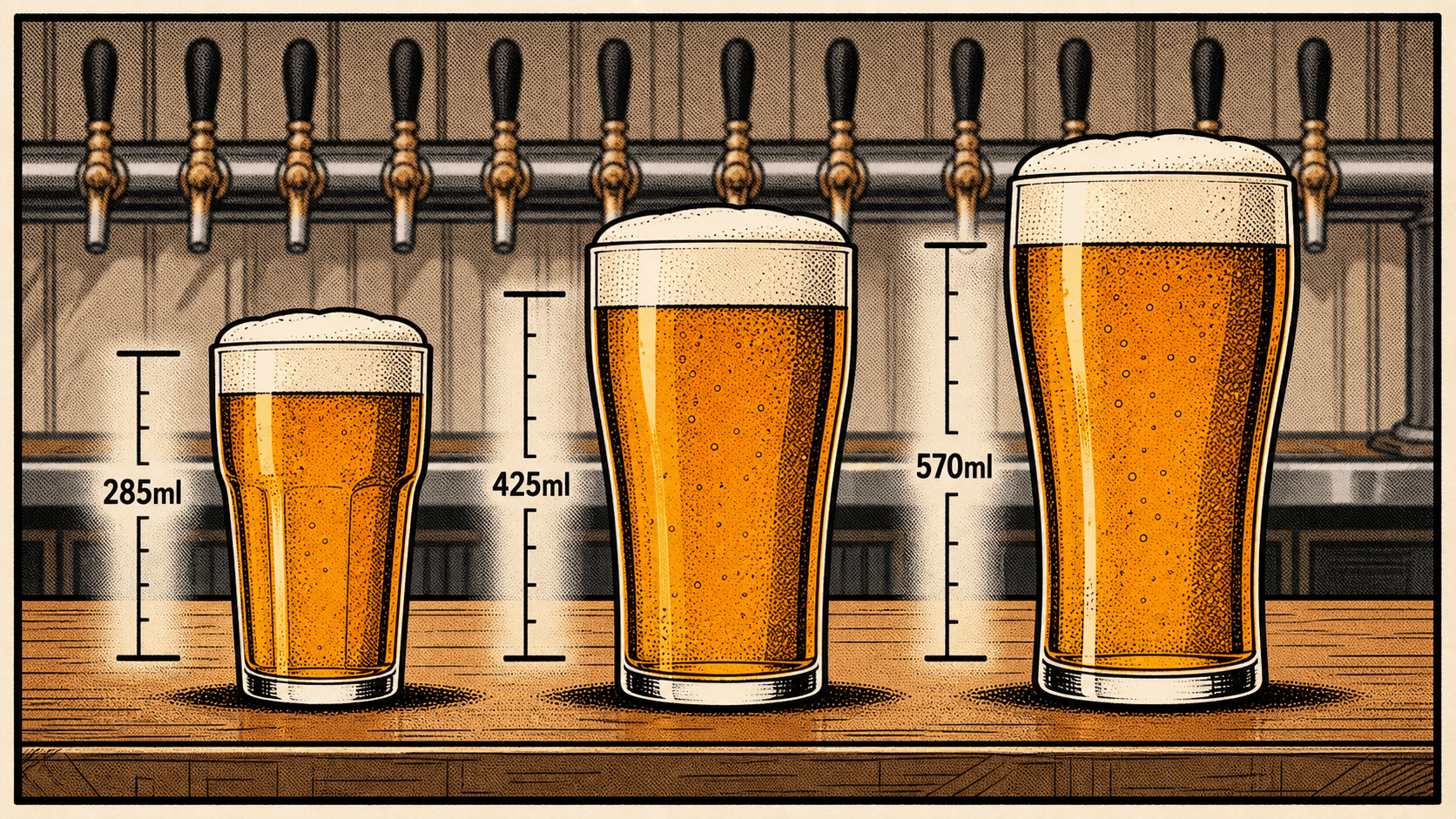
A pint is 570ml, a schooner 425ml, a middy 285ml. The gap between them is where a $9 beer quietly stops being a bargain — which is why we price every pint at 570ml.
01
Why a $9 beer isn't always a $9 beer
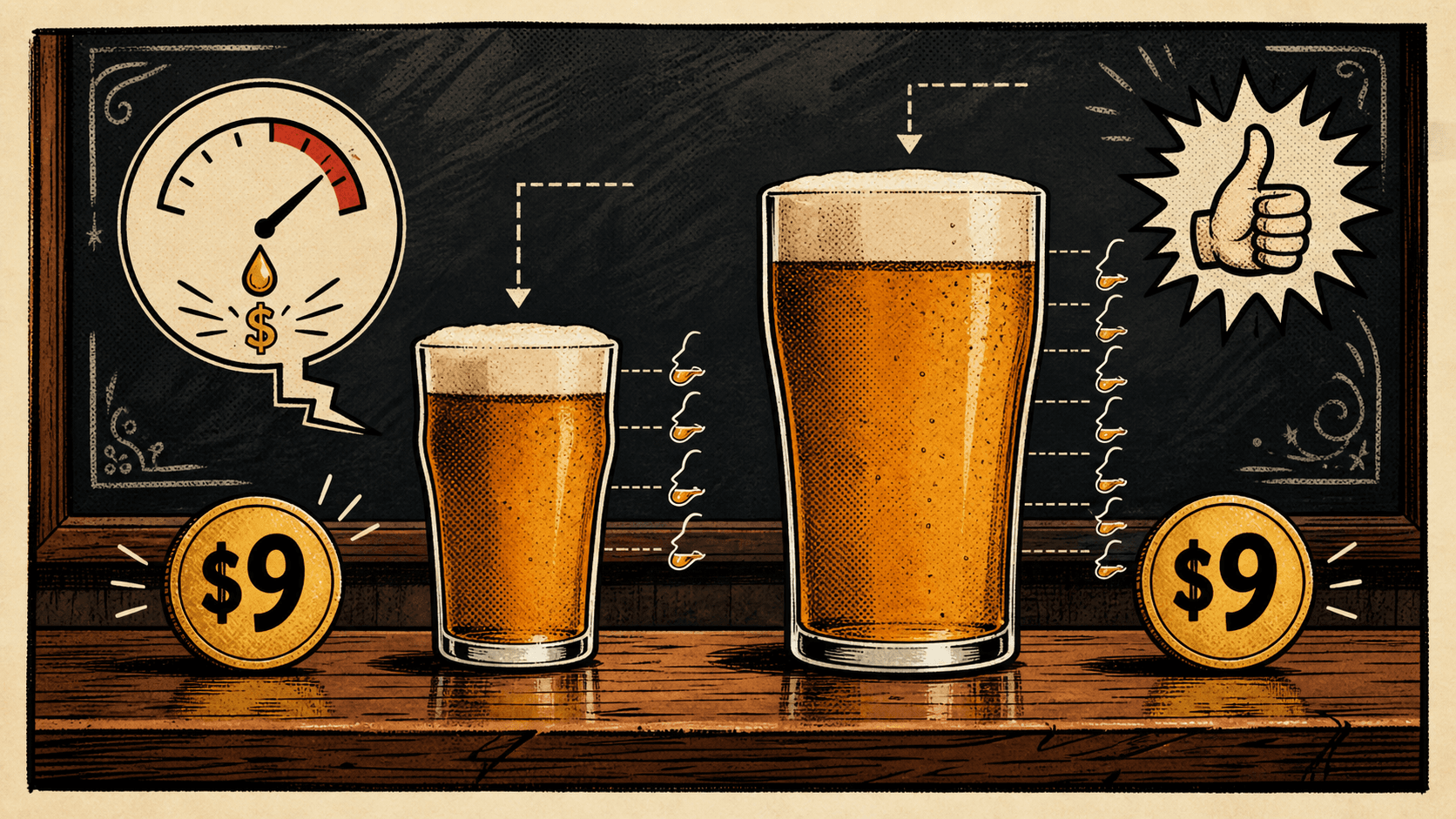
Start with the arithmetic, because it's the whole point. A $9 schooner is 425ml of beer, which works out to about $2.12 per 100ml — the same rate as paying $12.07 for a pint. A $9 pint is $9. The three-dollar gap is invisible on the blackboard, because Perth menus rarely say which glass the price is for.
That ambiguity is the reason this page exists. Every price on the site is tagged to a glass size, so a cheap number and a small glass can't quietly travel together.
02
The three sizes Perth pours
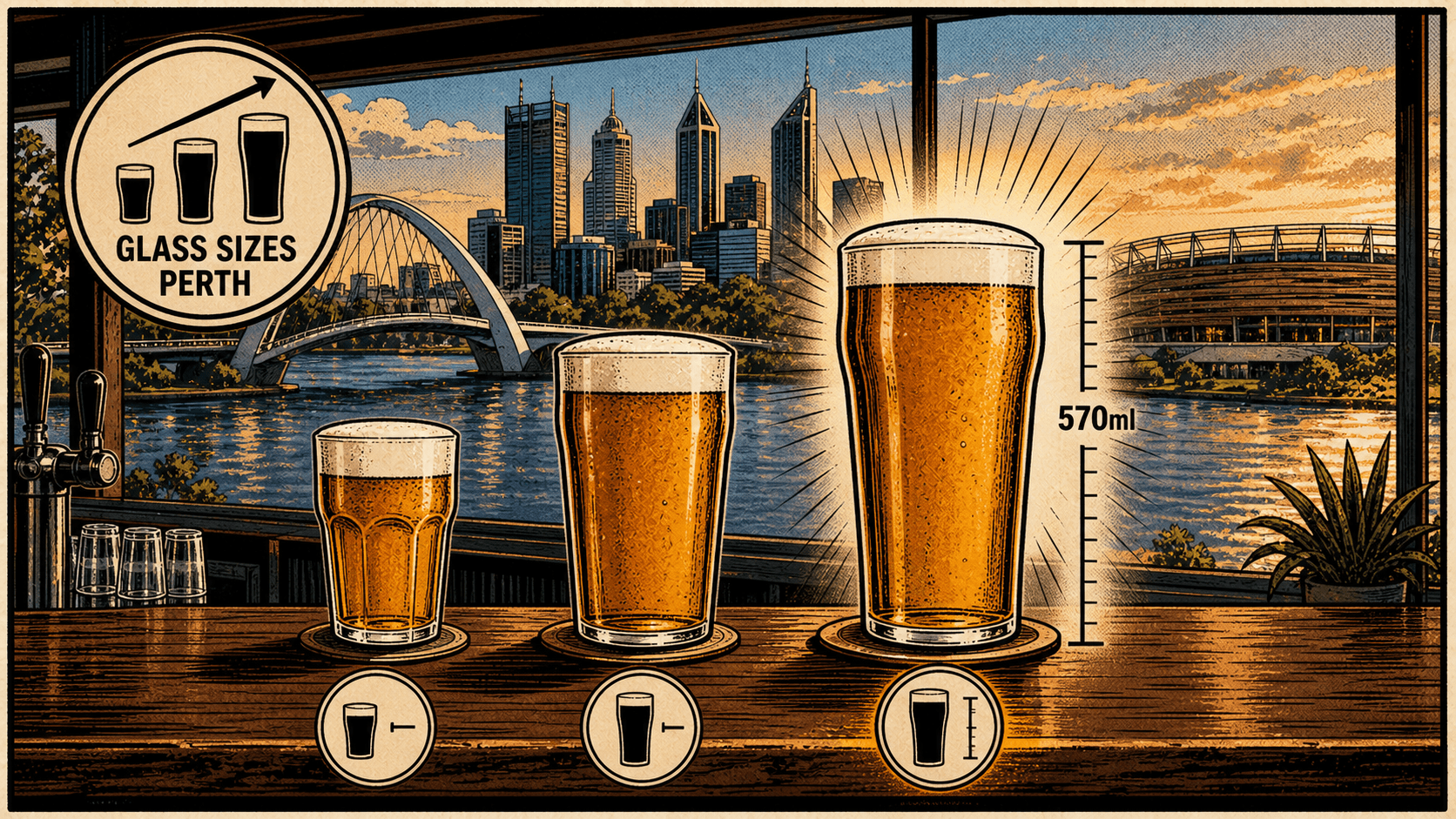
A middy is 285ml — half a pint, and the small one. A schooner is 425ml, three-quarters of a pint, and the quiet default at a lot of suburban bars and hotel taps. A pint is 570ml, the full glass.
The pint is more an Irish-pub and craft-room serve than a universal one, which matters: when a board just says beer and a price, it may be for a schooner rather than a pint unless the venue says otherwise. The difference is roughly a third of a glass.
03
The same glass, six names
Australia began formal metric conversion in 1970 but left the naming to the states, and the states went their own way. The 285ml glass is a middy in Perth, a pot in Melbourne and Brisbane, and a handle in Darwin — one glass, one country, several words.
South Australia inverts the lot. Over there a schooner is 285ml and a pint is 425ml, so a South Australian who orders a pint in Perth gets 145ml more than the word buys at home — which is why SA needs a separate term, imperial pint, for the real 570ml. One theory links the smaller SA pours to the temperance movement, though historians treat the origin as unresolved. None of this matters until you order in the wrong state, and then it's the only thing that matters.
04
Why we price everything as a pint
We benchmark on the 570ml pint because it's the largest common pour, and therefore the hardest to disguise behind a smaller glass. A $13 schooner and a $13 pint read identically on a board and are not the same drink; pricing both as a pint is what makes them comparable.
When a venue will only confirm a schooner or middy price, we record that size and leave it there — we don't convert it up into a pint number it never quoted. A pub we can't confirm at all sits at TBC and stays out of the suburb averages. An honest gap is more useful than a tidy guess.
05
What that looks like in Perth right now
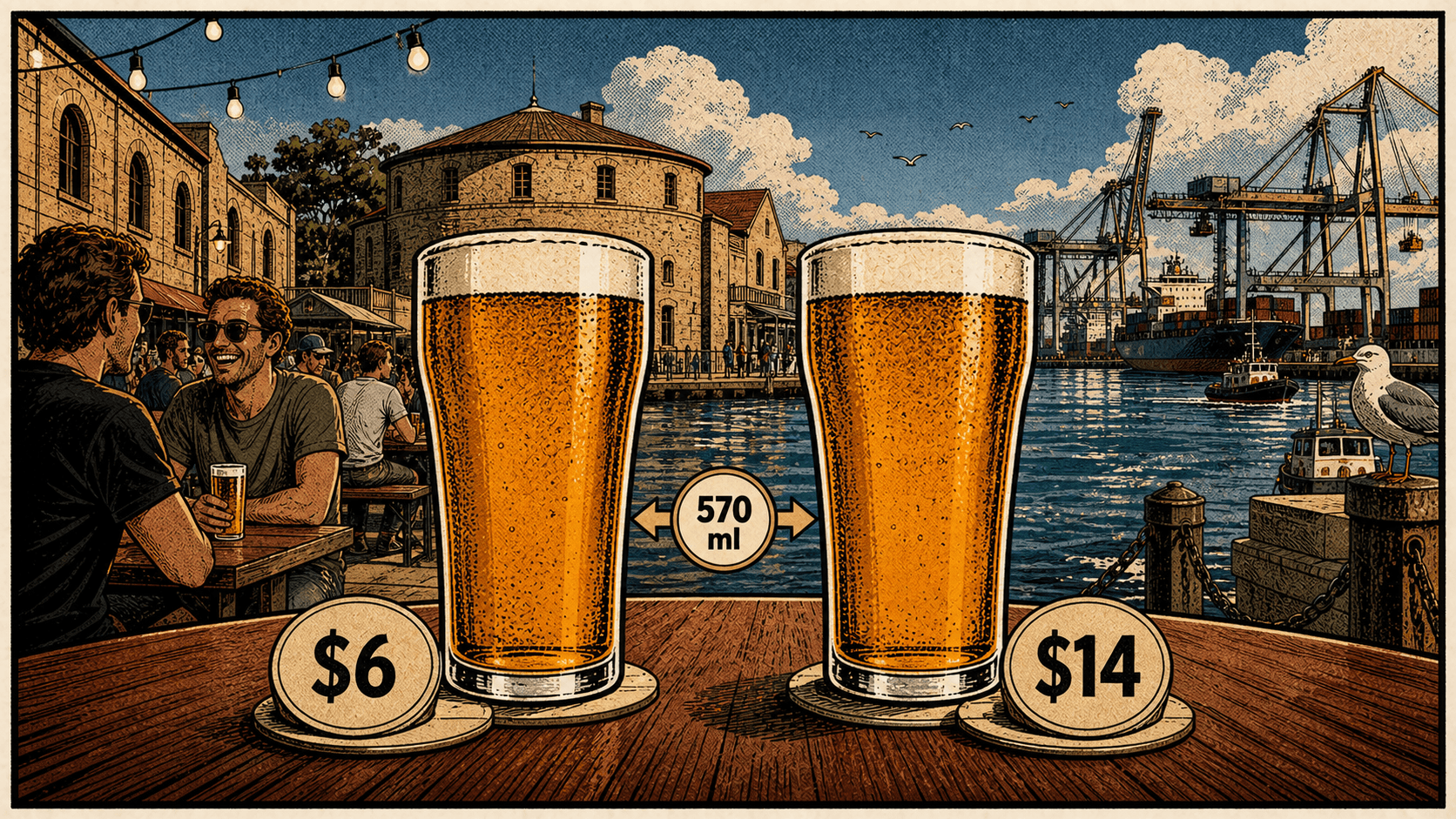
Held to a single measure, the real spread is wide. The cheapest verified pint in Perth is $6, at the Fremantle Buffalo Club, checked in March; one of the highest listed prices is $17 at BAHA in the CBD. Same city, same nominal glass, a very different bill.
Fremantle alone runs from that $6 to listed prices as high as $14, which is exactly why a single suburb average tells you less than a price for the specific pub at a known glass. The number on its own isn't the answer; the number plus the size is.
06
What makes a price worth reporting
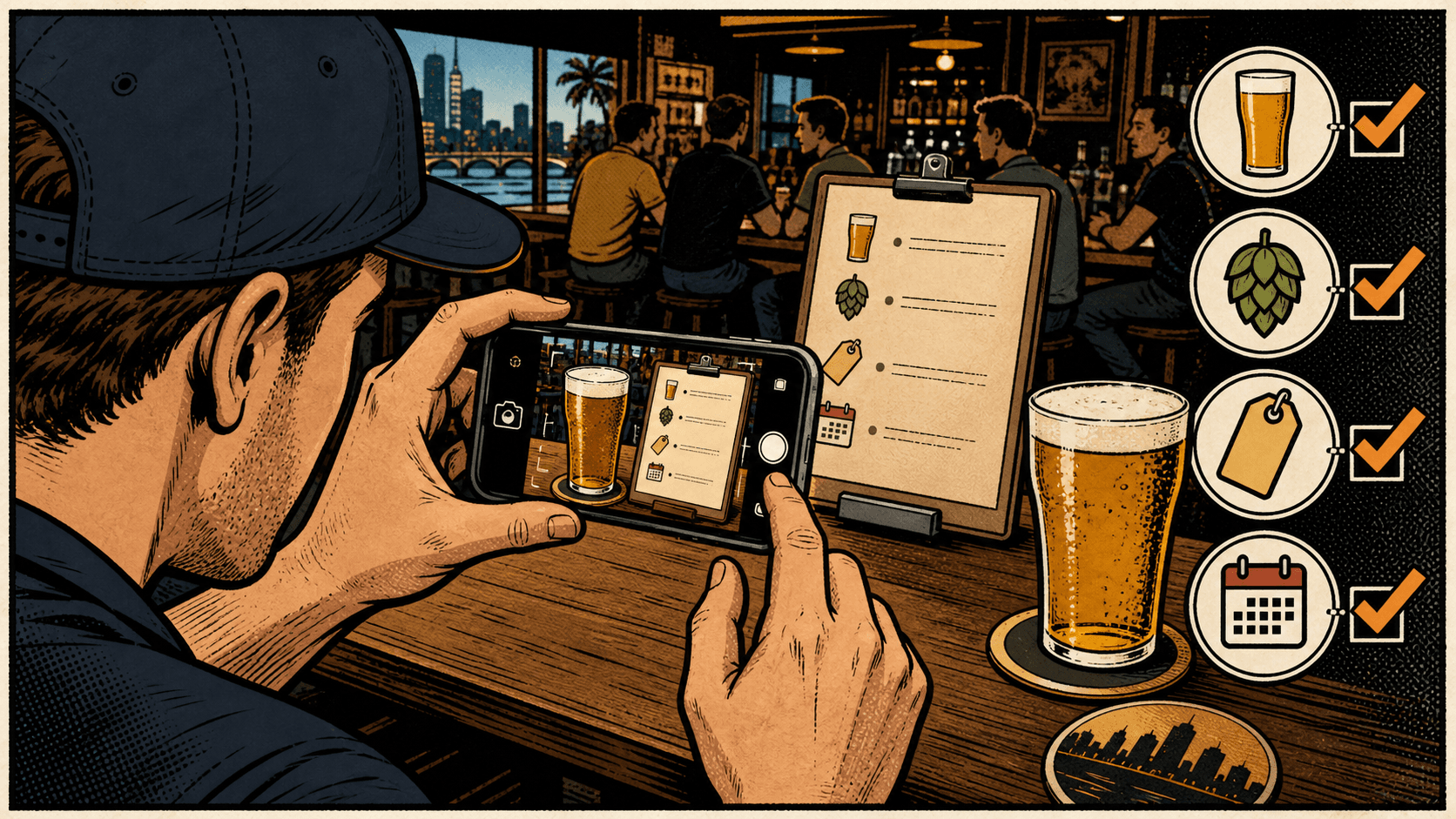
All of which comes back to one ask. A price we can use names the glass, the beer, the price and the date — ideally with a photo of the menu. About ten bucks a pint from memory isn't usable, because the part that does the work, the glass size, is the part memory drops first.
Report the glass size, beer, price and date. A photo of the menu helps. A memory from your mate's birthday in 2022 does not.
Reference
Glass sizes we care about
Middy
285ml
Small, useful, rarely the comparison point.
Schooner
425ml
Common enough to cause price confusion.
Pint
570ml
The PPP benchmark where we can verify it.